Sunday, June 30, 2013

GARDEN TOURS


JUNE 2013 IN CAYUGA COUNTY:

Since I was a teenager I have enjoyed going on garden tours.  I find them very educational and inspiring.  Gardeners express themselves in so many different ways through their gardens....artists painting with flowers.   One of the first garden tours I went on featured Martha Stewart's gardens on Turkey Hill Road.  Her gardens left a lasting impression on me.....Well thought out and beautifully designed with thought to color, texture combinations, and bloom time.  Although 20 or more years have passed since then I still remember her gardens.  We can learn so much from each garden we visit....  This year I visited a few gardens in Cayuga County New York.  The tours were sponsored by the Garden Conservancy, an organization that looks to preserve special gardens and open them to the public for education and enjoyment.

Bedlam Gardens, King Ferry, NY:

Splashes of color in a perennial border Bedlam Gardens, King Ferry, NY

Perennial and shrub border.

The beautiful apricot peonies are highlighted by the purple of the salvia.

An unusual fossil rock acts as lovely natural garden art

An old stump is a pleasant contrast to the soft globes of the alliums and soft mounding geranium. 

Striking Apricot poppies 

A colorful border of pastel iris, hot pink peonies, and yellow tansy.  The blue spruce topiaries mimic the form of the alliums.

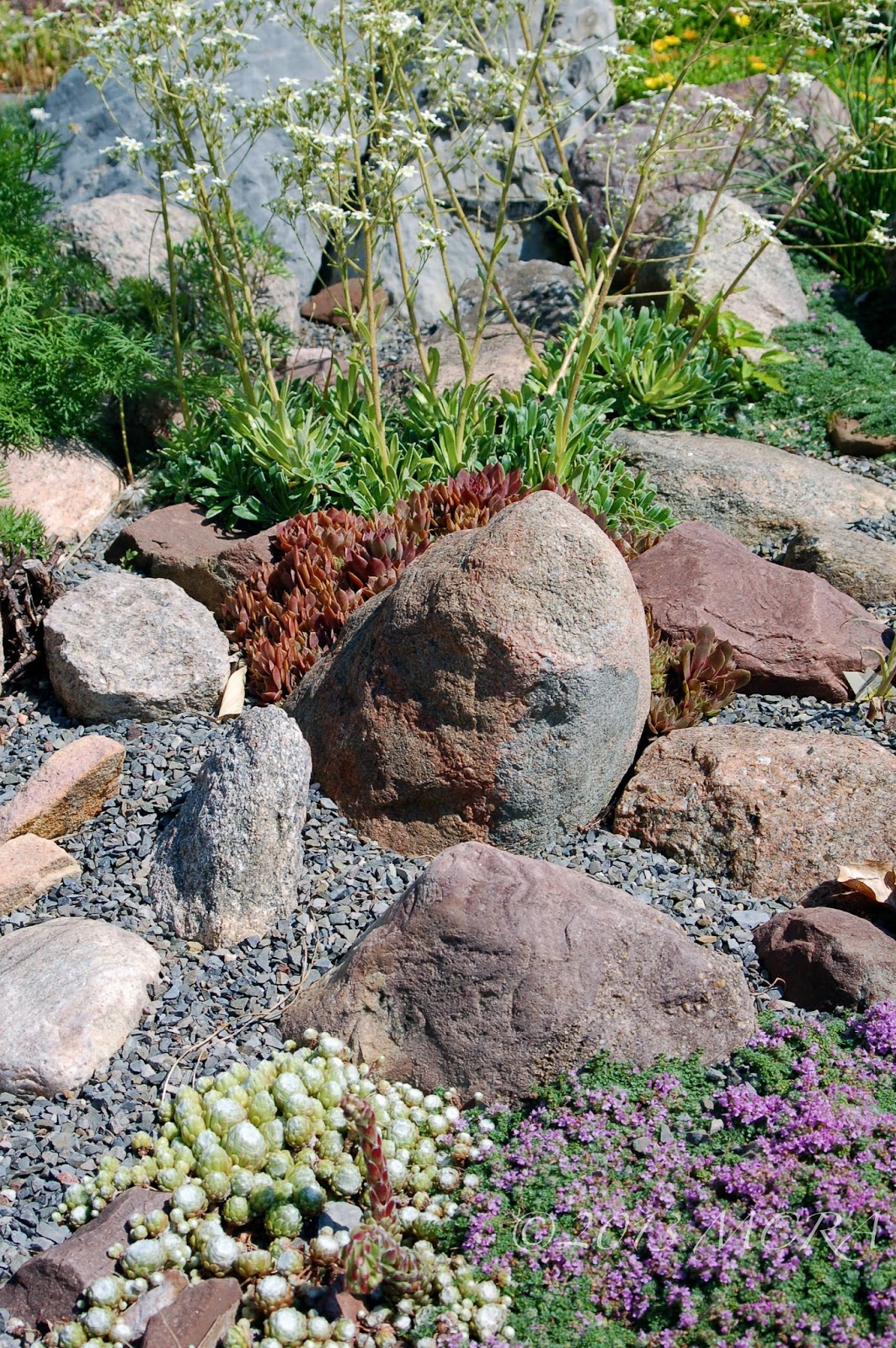
A rock garden blanketed with the softness of wooly thyme and contrasting shapes of sedum.  

Another fabulous fossil rock offset by the spikes of iris greens.

A lovely arbor creates shade for hostas, hellebores, and astilbes.


The peony gardens at Bedlam gardens were spectacular!  

Sunday, June 9, 2013

HEIRLOOM GARDENING


  A Plethora of Greens from the Spring Garden: 


Every year I love growing new and different heirloom vegetables.  Greens are one of my favorite things to grow since we eat so many of them every day.  Although I love greens, I have not been a fan of salads until recently;   when I started growing the best tasting lettuce in my organic garden. In my potager garden I like to plant the lettuce in a way that is pretty and utilitarian.  I used rows of lettuce as borders and plant small squares or rectangles of mixed lettuce to use as baby lettuce.  I find a patch of mixed lettuce works well when surrounded by a border of radish.  They compliment the taste of the other and  make great planting companions.  This spring I grew Forellenschluss Lettuce, on old Austrian heirloom, that may date back to the 1600's.  It is a romaine lettuce that is beautifully speckled.  I also grew Lollo Rossa Lettuce, a red ruffled lettuce that is beautiful and flavorful.  This variety holds well in heat.  I have noticed that the Forellenschluss does too, since we have some unseasonably hot weather and both are just fine.   These lettuce varieties (as with most heirlooms) are terrific self sowers if left to go to seed will re-sow.   I surrounded my plot of baby lettuce by a row of purple plumb radish.    
Lollo Rosso Lettuce


Blue Curled Scotch Kale

Kale is definitely a favorite green of mine.  My family has grown it for years and I grew up eating it very frequently.  I try to incorporate one serving into our diet every day.  There are so many health benefits to Kale that it makes sense to add it to your daily diet.  It is a powerful anit-oxident, anti-inflammatory, helps support your cardiovascular system, high in Vit A, C, K, and calcium.  It also supports liver health and helps to detox the body.  When kale is young and tender it is great in salad.  I also like to use it in a breakfast smoothie.  When it gets older and larger I usually steam it as a wonderful side.     This year I grew ‘Blue Curled Scotch’ (1863).  Plants are very compact and leaves are a beautiful bluish green.   


I plant spinach in small rectangles in my garden.  This year I surrounded the plot with sweet violets, since I love combining flowers with vegetables.  (these violets are not purely ornamental since both flower and leaf may be eaten).  A few cosmos have self sewn in the spinach patch, which I will soon transplant.  I planted a border of beets around the spinach that will be ready soon.  The beet greens are good eating and are nutritious,  and the beets themselves are fabulous when roasted.
My husband and I are big fans of spinach.  Like kale it has so many health benefits such as strengthening bones, and nourishing eyesight.  It also helps your digestive system and is beneficial to people with ulcers and acid reflux.  It improves skin health and like kale, detoxifies the body.  I always grow a spinach variety every year.  It is wonderful steamed or  raw in salads or pesto.  This year I grew Mero Nero Spinach, an Italian variety with dark leaves.  


Last night I wanted to make lobster ravioli, but did not feel like my traditional cream sauce or a marinara.  So I decided to make a pesto of spinach.  It was so good!  I can see this recipe working with young kale leaves or even chard.  I always use all organic ingredients.

Simple Spinach Pesto:
  • 2 handfuls of spinach (approx 4 cups)
  • 1/4 cup walnuts
  • 1 small clove garlic (larger if you like more garlic taste)
  • 1/4 cup olive oil
  • 1/4 cup parmesan cheese
  • juice of 1/2 lemon


In a food processor, pulse the walnuts and garlic until finely chopped.  Add all other ingredients except lemon juice and pulse until desired consistency of pesto is reached.  Pour into a small bowl and stir in lemon juice.  This recipe will also work well with other pastas.  It makes two large or 4 small servings, depending on how much pesto you like on your pasta (I like a good amount).  

A view of my garden in early June.  vegetables are bordered by heirloom roses and violas.  I also allow daisies or clary sage to self sow here and there.  A border of nepeta divides the garden.

Due to some very hot weather, my baby bok choy has bolted, but I leave the flowers to self sew.  Behind the bok choy is a patch of Blue Curled Scotch Kale.  I surround the plot with heirloom roses, violas, and viola labradorica.  


Here is my perfect spring lunch salad. 

Picked fresh from the garden I combine 
Forellenschluss Lettuce, 
Lollo Rossa Lettuce, 
baby Blue Curled Scotch Kale, and 
baby Mero Nero Spinach.  
I added sliced grape tomatoes, avocado and black sesame seeds...

I dress my salad with Carrot Ginger Dressing.  I found the perfect recipe in Gwyneth Paltrow’s latest book, “It’s all Good”.  Here is a link to her recipe :  www.goop.com/recipes/salads/salad-gingercarrot

Thursday, May 23, 2013

The Violet; one of the most beautiful flowers of spring...


“Tiny little violets coming in the spring, 

Happy songs of summer to our hearts you bring;

Your delicious perfume scenting all the air, 

Tell us where you’re hiding in the woodland fair.”  

My grandmother would sing this song to me each spring.  We would always take a walk down the road to visit the violet patch that grew on a small plot in a land trust.  I could not get enough of the sweet scent or beautiful shades of purple that blanketed the ground.  Perhaps this is where my love of violets started.   The end of April through May are my favorite days of the whole year since this is the time the violets bloom in the Northeast.   There are quite a few varieties on my piece of property alone.  Here are some that I have enjoyed this spring

Viola odorata 'Rosina'
Viola odorata 'Rosina'   
Viola odorata 'Rosina'  


 Viola odorata ‘Rosina’  is a very pretty pink violet that can be different shades of pink to purple according to the PH of the soil.   It is a highly scented violet that is one of the earliest bloomers,  blooming at the end of March.  It spreads if it likes the spot you plant it in.  Loves soil rich in leaf mold.  Does well in zone 4.  


Viola sororia 'albiflora'

Viola sororia ‘albiflora’ is a very large white violet that is so lovely in bouquets.  It does not have a noticeable scent.  I recently found a few plants near my riding ring growing in very sandy soil, but doing exceptionally well.  It is the first time I have found these on my property. 


Viola sororia 'priceana'


Viola sororia ‘priceana’ also called the Confederate Violet because it has similar colors to that of the confederate uniform.  This violet is lovely when naturalized in large areas...it will blanket the area in beautiful large white flowers.  I love it as a border plant.  It has no noticeable scent.


Viola sororia
Viola sororia is the common blue violet that many of us have in our lawns.  It is absolutely beautiful as a border flower or even in a section of lawn that it can be allowed to take over.  It has no noticeable scent.
 
Viola odorata 'royal robe'

I just started growing Viola odorata 'royal robe' in one of my gardens.  It has a delicate sweet scent.  So far it is doing very well, but has yet to spread.  I may move it to a sunnier location to see if it does better.  Sometimes Viola odorata benefits from a little bit of sun.


Viola odorata

Viola odorata
This is a Viola odorata that we have had on our property for at least 40 years.  I think my mother brought the first plants here from Fairfield, CT when she moved here as a newlywed.  It may be a variety of Hungarian violet that my family grew.  It has a very large purple flower that fades to blue as pictured above.  It has a very beautiful sweet scent that is very different from 'Rosina'. 

Viola odorata 'White Czar'

Viola odorata 'White Czar':  I bought this violet a few years back from a nursery.  Since then it has spread somewhat, although it is not as prolific a sewer as the nurseries claim.  It has a very delicate scent and makes a lovely cut flower.  I think this violet would be ideal for a bride's bouquet.

Viola sororia 'Freckles'
I love Viola sororia 'Freckles' for it's very pretty speckled and painterly look.  It is an unscented violet and is hardy to zone 4.  It does well in part shade; I have found that it does not do well in full shade as some may suggest.  It will do very well and spread in soil amended with leaf mold.


Viola labradorica 'Purpurea'
Viola labradorica 'Purpurea' is a great violet choice if you are looking for a ground cover with lovely dark leaves.  The delicate purple flowers are an added bonus.  Works beautifully as a border plant or planted under roses and with orange tulips such as 'Princess Irene' (a favorite of mine since on of my grandmother's names was Irene).  Hardy to zone 4 and a prolific sewer by rhizome or seed.  I find their lovely little bronze leaves coming up all over my garden and feel the need to transplant each one.  The blooms are unscented.  I found they do well in part shade and sun.


Viola striata


Viola striata, or striped cream violet, was gifted to me by Sydney Eddison a few years back.  I told her that I collected violets and she gave me a small clump of these beautiful violets.  Now they have spread all over our property.  They go well with my primroses in my primrose garden since they like the same type of soil and conditions.  they look beautiful as a border flower or in mass plantings in beds.  They stand out when interplanted with dark leaved heucheras.  They are unscented.


Viola pubescens
Viola pubescens


A walk in the spring woods reveals even more beautiful violets.  The woodland floor and path I ride Basil, my horse, on is often blanketed in the lovely Viola pubescens or downy yellow violet in early May.  They are an unscented variety.

Viola conspersa

viola conspersa
Viola conspersa


Along the woodland trail intermixed with the downy yellow violet the Viola conspersa or dog violet can be found.   The are very delicate little flowers with a spur.  They form little clumps and have rather short stems.  Once in awhile you may come across a clump with slightly longer stems so you can pick a petite bouquet.  They have a delightfully sweet scent.

Viola cucullata
viola cucullata


viola cucullata

As a little girl I loved to walk around our pond, along the stream, and through the marsh to pick Viola cucullata, or marsh blue violet.  They have very long stems, range in color from pale blue to lilac.  They have no scent.  They have spectacular eyes that make them very pretty in a bouquet.   Our neighbor has a beautiful marsh area where these grow in very large numbers;  it is a lovely sight when they are blooming at the same time as the bright yellow marsh marigold.

Viola blanda

Viola blanda, or sweet white violet, is a very small violet that grows in the dryer parts of the woods.  I was only able to find one small clump this spring.  Upon doing a little research I found it is an endangered species.  So sad, since it is such a beautiful little violet.  It does have a very faint scent.

Viola sagittata


Viola sagittata, or arrow leaved violet, grows in sandy soil in part shade.  It stands out with it’s beautiful arrow shaped leaves.  It has no noticeable scent.  I found it growing along my riding ring and near our barn driveway.  Only a few clumps.  I am hoping they spread.


I hope you enjoyed my photographic journey of the various violets on my property.  There is more to come as I am always searching the woods of my home and that of my parents for new and different violet varieties.

For more information on violets the American Violet Society is a wonderful source:  americanvioletsociety.org


Tuesday, April 2, 2013

Luscious Lavender Carrot Shampoo


I am always searching for great organic and natural products to use on my skin, hair, and body.  In my quest for the perfect natural shampoo I mostly found disappointment.  Pricey products that claim to be organic and natural and I still can not pronounce most things on the ingredient list.  So I decided to make my own.  I have tried several DIY recipes and so far have found this one to be the best.  I have long fine hair that sometimes gets weighted down with heavy formulations, but this formula works great and does not weight my hair down.  I follow with a vinegar rinse and a little conditioner on the ends to help with tangling (my hair gets very tangled no matter what I do).  The carrot seed oil in the recipe will help nourish your hair roots and may even make your hair thicker and may keep it from going grey or white.  One of my Hungarian grandmothers used to drink carrot juice every day.  Her hair only started going grey when she was in her late 80's.  I am sure it was the carrot juice.  Lately, my father swears that I must dye my hair since it is so dark and glossy....I swear I don't :  )

Lavender Carrot Shampoo:
1/2 cup distilled water
1/2 cup castile soap (Dr. Bronner's Lavender or Hemp Rose are excellent choices)
1 tsp organic jojoba oil
1/2 tsp organic carrot seed oil
20 drops organic lavender oil

Mix all ingredients in a shampoo bottle, shake before use.  You will note the shampoo is thin....you can thicken with xanthum gum if you like, but you will get used to the thin consistency after a few tries.  I follow with a vinegar rinse:

Frankincense Rose Vinegar Rinse:
1/2 cup distilled water
1/4 cup apple cider vinegar
15 drops each rose absolute and frankincense oil

I hope you enjoy these recipes and they work for you.  I have been using them for several months now and notice great results.  Whereas I used to need to wash my hair every day, I now only have to wash it every other day.  It is also growing faster and I need trims more often.  So far so good!


Monday, February 18, 2013

Pretty Primroses

Primula polyanthus in a planter from Campo de Fiori surrounded by moss, a lovely splash of colors indoors when the temperatures outside are frigid.
Springtime is primrose time!   The name primrose comes from the Latin 'prima' which means first and 'rosa' which means rose....so, first rose.  As soon as primroses start showing up at my local grocery store I can not resist.    These classic cottage garden beauties offer a full spectrum of dazzling colors that bring happiness indoors when the temperatures outside are bleak and snow blankets the ground.  I find that they last for quite awhile indoors and by the time they fade the snow has melted, the ground has warmed a bit, and they can be planted outside in your garden to come up year after year.   I have many that I simply bought in the grocery store and they have come up continually for over 15 years in my gardens.  These particular primroses can be grown in zone 3 and up!  Quite hardy!

When the winter snow subsides and the sun begins to warm the soil, the beautiful jewels from the genus Primula emerge!  I have a particular garden in a shaded area where primulas thrive.  Since it is not a naturally damp location I keep it watered when rain is not plentiful.
Primula veris or cowslip which very closely resembles Prumula elatior (oxlip) but the cowslip has smaller bell shaped flowers with red dots inside the flowers with leaves that are more spade shaped.

Primula kisoana, a Japanese variety spreads very easily and creates beautiful pink groupings throughout the garden.  Mine were a gift from Sydney Eddison when I visited her private gardens.  I will treasure them always.


Primula polyanthus planted with violets and hellebores.  They come up every year and need dividing once in awhile.
Primula japonica and Primula sieboldii foliage just emerging while Primula kisoana and Primula veris are blooming along with the hellebores in the early spring garden.  As you can see, Primula japonica spreads prolifically.  They transplant very easily, thank goodness.  

I was blessed with the chance to visit Sydney Eddison's primrose garden one spring with my mother.  They are the most beautiful gardens I have seen.  She is very talented at naturalizing primulas and combining them with other woodland plants that bring out their beauty. 

Hose in hose form of Primula vulgaris 


Primula vulgaris 'sibthorpii'


Primula vulgaris 'balearica'
Primula veris, or cowslip


Primulas naturalized along a woodland path.

Primula acaulis, a lovely splash of color in the woods to brighten up the woodland path.


Primula sieboldii, a Japanese primrose, is a very elegant flower with beautifully feathered petals.  The foliage is also slightly ruffled.